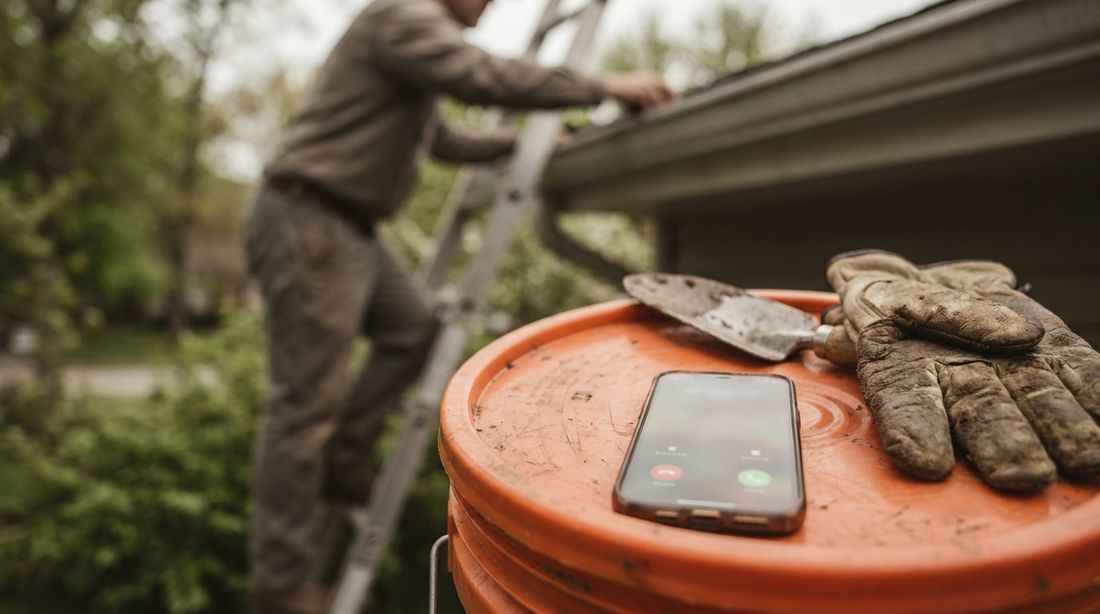
A roofing company owner I worked with was convinced his phone coverage was fine. He had two office lines and a cell. He figured he caught maybe 85% of calls. When we pulled the actual data (three months of inbound call logs versus booked jobs), his real answer rate was 61%. He was missing four in ten calls without knowing it.
The math on what that cost him was not comfortable to look at.
If you have never run the numbers on your own operation, here is how to do it, and what the result usually means.
The Missed-Call Revenue Formula
The calculation has four inputs. You probably know three of them off the top of your head; the fourth requires a little honesty.
Monthly inbound calls: New-lead calls only, not callbacks to existing customers. Check your call log or your phone system's summary report.
Miss rate: The percentage of those calls you did not answer in real time. "In real time" matters here: a call that went to voicemail counts as missed, because roughly 80% of callers who reach your voicemail hang up and dial the next contractor rather than leave a message. If you have no data, a conservative starting estimate for a one- or two-person operation is 30–35%. Evenings and weekends push it higher.
Booking rate: Of the calls you do answer, what fraction turns into a booked job? For most home-service trades, 40–60% is realistic on a good day. Use your actual number if you track it.
Average job value: Your average ticket for a new customer, not a maintenance visit. HVAC service calls run $350–$600; installations run $4,000–$12,000. Use a blended average across your job mix.
Put them together:
Monthly calls × miss rate × booking rate × average job value
An example. An HVAC shop takes 45 inbound calls a month, misses 33% of them, books 50% of the ones they answer, at a $750 average job:
45 × 0.33 × 0.50 × $750 = $5,569 per month.
The Number Most Owners Miss: Lifetime Value
The formula above calculates the first-job loss. It understates the damage.
A homeowner who gets their furnace serviced by you this October is likely to call you again in the spring. And for the AC. And when something breaks. A plumbing customer, on average, generates 2–3 service calls over five years. If she also refers one neighbor (common in tight neighborhoods after a good job), you have lost three or four customers from a single missed call, not one.
Multiply your per-call leak by a customer lifetime multiplier of two or three and the real cost of poor call coverage becomes a different conversation entirely.
Why the Leak Is Bigger Than Your Missed-Call Log Shows
Three patterns make the revenue gap worse than the raw call count suggests.
The after-hours gap. Roughly 30–40% of new home-service inquiries come in after 5 pm and on weekends, the exact window when most contractors have no coverage. Those callers have a broken AC in July or a leak that started Saturday morning. They are high-urgency and quick to book. They are also the first to move to whoever picks up.
The voicemail illusion. When a call goes to voicemail and no message is left, most call-tracking systems log it as a completed call, not a missed one. Your answer-rate dashboard looks better than it is. Check your call recordings or listen back to see how many actually connected versus rang to a voicemail greeting and disconnected.
The response gap. Speed to lead data is consistent across the trades: a contractor who responds within five minutes is 21 times more likely to convert a lead than one who responds in 30 minutes. Even calls you technically answer (if the callback comes 40 minutes later) lose a meaningful share of jobs to whoever got there first.
The Three Levers That Close the Gap
Once you have run your numbers, the fix is not complicated. It is a coverage question, not a technology question.
Answer every call, around the clock. For a $2M HVAC business, hiring a dedicated after-hours receptionist costs $35,000–$50,000 a year before benefits. An AI-assisted answering system covers the same calls at a fraction of the cost and without a sick day. The key requirement is the same either way: a real voice or real text response, not a voicemail prompt.
Recover the ones you miss. No coverage system answers 100% of calls. Missed-call text-back (an automatic message sent to any caller you missed within seconds) keeps the conversation alive on the channel the homeowner is already holding. The message does not need to be clever. "Hi, this is [Business]. Sorry we missed you, still need help?" recovers a meaningful share of calls that would otherwise disappear.
Measure your actual answer rate. Pull three months of call logs, separate new-lead calls from callbacks, and calculate the real number. Most owners who do this exercise for the first time find it 10–15 percentage points lower than they assumed. That gap is the first thing to fix before spending another dollar on advertising to fill the top of the funnel.
If you want a clearer picture of where your specific revenue is leaking (across call coverage, booking, follow-up, and review generation), the Growth Score maps it in about three minutes.

Jaymo Barnard is a brand strategist and growth architect with 25+ years building scalable marketing systems across wellness, media, consumer products, and education. As founder and CEO of Mandala Growth Partners, he has led initiatives behind major acquisitions, national brand launches, and multi-million-dollar lead-generation systems. At Kinjo Pro he leads brand strategy and growth architecture.
Frequently Asked Questions
It depends on your call volume, miss rate, booking rate, and average job value. A contractor taking 40 inbound calls per month, missing 35% of them, booking half of what they reach, at a $700 average job, loses roughly $4,900 in potential revenue every month — not counting repeat work or referrals from those customers.
Industry call data suggests that one-person operations miss 30–50% of inbound calls. Even well-staffed shops miss 15–25% on evenings and weekends when crews are off. The gap widens significantly after 5 pm, when 30–40% of new service inquiries come in.
For revenue-leak purposes, yes. About 80% of callers who reach voicemail hang up without leaving a message and call the next contractor. So a 'missed call' means a missed job whether or not the phone rang — most of those callers are already gone before you see the notification.
Missed-call text-back — an automatic text sent within seconds of a missed call — recovers the conversation before the homeowner books with a competitor. Paired with answered calls around the clock, it closes the response gap that causes most of the leak.