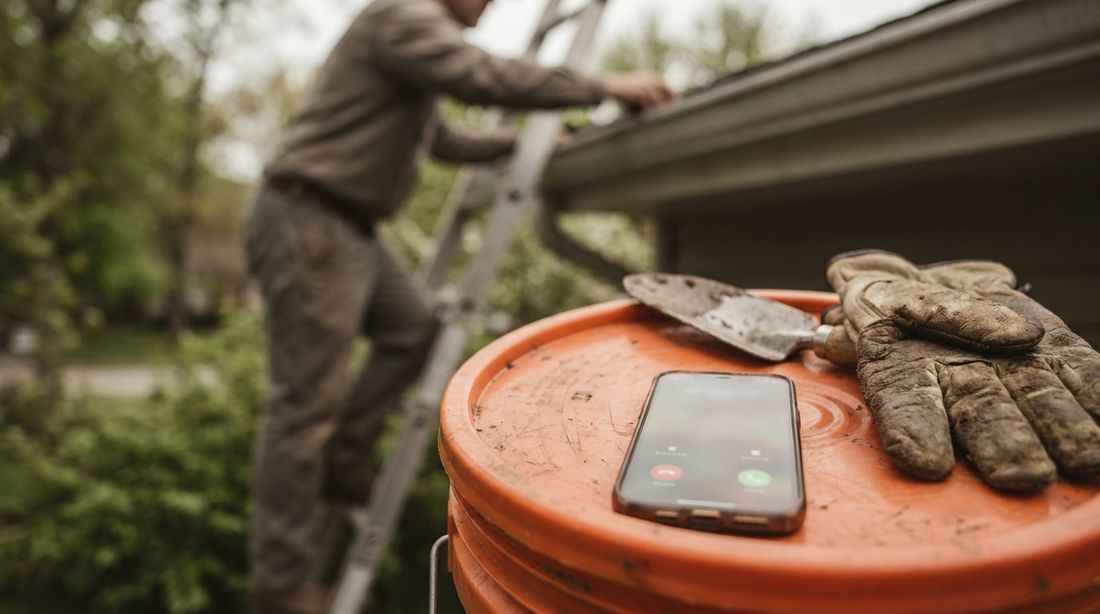
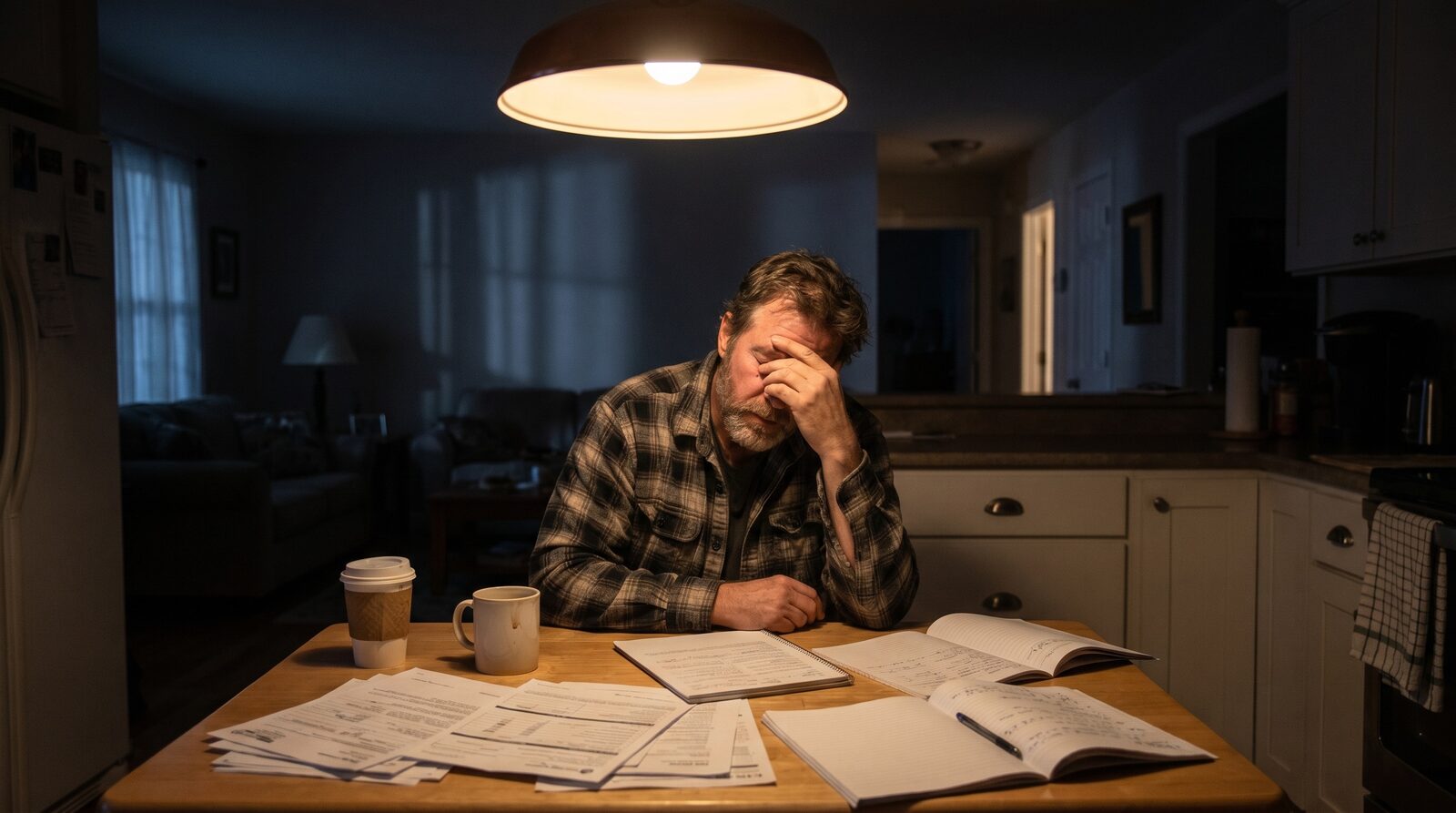
Picture a homeowner standing in two inches of water, phone in hand, a shut-off valve that won't shut off. She does not want to talk to you specifically. She wants the water to stop. She has your number, and two more pulled off the same Google search. She dials the first one. It rings, then a recorded voice asks her to leave her name and number after the tone.
She hangs up. She dials the next contractor.
That is the moment most owners never see. You were on a roof, under a sink, or driving with the radio up. By the time you notice the missed call and tap that little voicemail icon, there is nothing there. You assume she did not really need the work. She did. She just gave it to whoever picked up.
A missed call is not a message waiting for you
Here is the number that reframes the whole problem: only about one in five callers who reach a voicemail will actually leave one. The rest say nothing and move on. Reported across call-handling data for years, the share of callers who leave a message sits near 20%, which means roughly 80% leave you with a silent missed-call log and no way to follow up.
For a dentist or a law office, that might mean a callback tomorrow. For the trades it is sharper, because the calls are urgent and the homeowner has a stack of alternatives. The voicemail you are counting on as a safety net catches almost nothing. The lead does not wait in a queue for you. It walks straight to a competitor while your phone shows a number you will call back too late.
Why homeowners hang up instead of leaving a message
Homeowners skip voicemail for reasons that have nothing to do with how good your work is. The behavior is the same whether you are a one-truck plumber or a 30-tech HVAC shop. Three things drive it.
The problem is urgent and the clock is loud. No heat in January, no AC in a July heat wave, a panel that smells like it is burning. The homeowner needs an answer now, not a promise that someone might call back. Leaving a message means waiting on hold against a problem that is getting worse by the minute.
You are not the only number they have. Speed-to-lead research is blunt about this: about 78% of customers hire the company that responds first. The homeowner already knows this instinctively. Why narrate her emergency into a recording for one contractor when she can just call the next one and maybe reach a live person?
Voicemail feels like a black hole. She has left messages before and waited two days for nothing. So the recording itself reads as a signal: this company is busy, slow, or closed. The beep tells her to keep dialing, and she does.

What the silent voicemail actually costs you
The damage is easy to miss because it never shows up as a complaint. Nobody calls back to tell you they hired someone else. The job simply never existed in your world. That is the quiet shape of a revenue leak: money lost through a gap you cannot see in your own books.
Run the math on your own shop. Home-service businesses commonly miss around a quarter of inbound calls, and the rate climbs after hours and on weekends, exactly when a pipe bursts or a unit dies. Multiply your missed calls by your average ticket, then by your normal close rate, and you get a monthly number most owners would rather not look at.
| What you assume | What usually happens |
|---|---|
| "They'll leave a message." | About 4 in 5 callers leave nothing and call the next contractor. |
| "I'll call back soon." | By the time you do, the homeowner has already booked someone who answered. |
| "It was probably a sales call." | After-hours and weekend calls are when real emergencies, and the best tickets, come in. |
The response gap, the window between when the homeowner calls and when you respond, is where the job is won or lost. Voicemail does not close that gap. It widens it, because it pushes the next move back onto you at the exact moment the customer has already moved on.
The fix is not a better voicemail greeting
Rewriting your greeting does not change the outcome, because the homeowner still ends up talking to a machine and waiting. The play that works is to meet her on the channel she is already holding, fast enough that the conversation never dies at the beep.
That is what missed-call text-back does. The second a call goes unanswered, an automatic text goes out to that caller: a real reply, on the device in her hand, while she is still standing in the water. "Sorry we missed you, this is [your company]. Are you dealing with an emergency? Reply here and we'll get you scheduled." Now she is in a text thread with a business that answered, instead of three rings into the next contractor.
Pair that with coverage so live calls get caught in the first place, and the leak closes from both ends. The strategy is the same one behind every lead response speed play: shrink the response gap to seconds, and stop relying on a voicemail box the customer will never use.
How to tell if voicemail is quietly leaking jobs
Most owners overestimate how well they catch calls, because they remember the ones they answered and forget the ones that went silent. Two numbers tell the truth: the share of inbound calls you answer live, and what happens to the ones you miss. If your missed calls end at a voicemail box, assume four out of five of those callers are gone.
If you do not know those numbers, start there. The Growth Score measures your answer rate, response speed, and what your missed calls actually cost you each month, then shows you where the leak is and how big it is. It takes about three minutes. For the wider picture on why fast response decides the job, the speed-to-lead statistics lay out the research, and the call-capture side covers what happens to a lead the moment you don't pick up.
Sources
- Voicemail abandonment data: the share of callers who hang up without leaving a message when routed to voicemail is widely reported at roughly 80% across call-handling and business-phone analyses. Treat as a directional benchmark and verify against your own call records.
- Lead Connect buyer survey, popularized by Vendasta: "78% of customers buy from the first responder." vendasta.com/blog/lead-response-time
- Oldroyd, J. B., McElheran, K., & Elkington, D. "The Short Life of Online Sales Leads." Harvard Business Review, March 2011. hbr.org/2011/03/the-short-life-of-online-sales-leads
- 2026 home-services missed-call data, compiled from industry analyses of contractor call handling. Figures are reported ranges, not guarantees.
Statistics compiled June 2026. Percentages are drawn from cited research and industry data; treat them as directional benchmarks for your own shop.

Jaymo Barnard is a brand strategist and growth architect with 25+ years building scalable marketing systems across wellness, media, consumer products, and education. As founder and CEO of Mandala Growth Partners, he has led initiatives behind major acquisitions, national brand launches, and multi-million-dollar lead-generation systems. At Kinjo Pro he leads brand strategy and growth architecture.
Frequently Asked Questions
Because a homeowner with an urgent problem is calling several contractors at once. Voicemail feels like a dead end with no idea when, or whether, someone will call back. So roughly 80% of callers hang up and dial the next number rather than leave a message.
Only about one in five. Industry call data puts the share of callers who leave a message when they reach voicemail at around 20%, which means roughly 80% leave nothing and move on to a competitor.
No. A polished greeting still ends in a recording and a wait. What recovers the call is an immediate response on the channel the homeowner is already holding, usually an automatic text back within seconds of the missed call, so the conversation continues instead of dying at the beep.
Missed-call text-back automatically sends a text to any caller you miss, within seconds, so the homeowner gets a real reply on their phone instead of a voicemail prompt. It keeps the lead engaged and is one of the simplest ways to recover the calls that would otherwise become a competitor's booked job.