The 78% rule is simple: about 78% of customers hire the company that responds to them first. In the trades, that means the first contractor to answer the phone or text usually books the job, before price or reviews ever come up. If you run an HVAC, plumbing, electrical, or roofing shop, the rule decides more of your revenue than your pricing does, and most owners have never measured whether they're on the winning side of it.
You feel the rule without naming it. A homeowner with no heat on the coldest night of the year is not building a spreadsheet. They are dialing names off a Google search until someone picks up. The contractor who answers gets to help. Everyone else gets a voicemail they'll never hear back from.
What the 78% rule actually says
The number comes from a Lead Connect buyer survey, popularized by Vendasta: roughly 78% of customers buy from the business that responds to their inquiry first. It reorders how an owner should think about competition. You are not mainly fighting to be cheaper or to hold a higher star rating. You are fighting to be first.
That sounds unfair, and it is. A better, cheaper, more reputable contractor loses to a faster one every day, because the faster one is already in the homeowner's kitchen writing up the job. The rule does not care how good you are if the customer never reaches you.
Why "first" beats "cheapest" in a homeowner's head
Speed wins because, to a stressed homeowner, fast response is a signal. The contractor who answers now reads as available, and available reads as competent enough to fix this today. Slow reads as the opposite, whether or not it's fair.
Picture the burst pipe. Water is spreading across the laundry-room floor and the homeowner has shut off the main, which means no water to the whole house. They are not shopping. They are scared, and they want the bleeding to stop. The first plumber who picks up and says "I can have someone there this afternoon" has effectively won. The second plumber, calling back an hour later, is interrupting a problem that's already being solved.
This is the part of the rule that pricing can't fix. Once a homeowner has a contractor on the way, your lower quote is a reason to feel a little regret, not a reason to start over. The response gap, the window between the homeowner reaching out and someone answering, is where the job is won or lost. Close it and the rule works for you. Leave it open and it works against you.
The math behind the rule: minutes, not hours
The 78% rule has a clock attached, and the clock is brutal. The Lead Response Management Study found that contacting a new lead within five minutes makes you about 21 times more likely to qualify it than waiting 30 minutes. Not 21 percent more likely. Twenty-one times.
So "first" usually means first within a few minutes, not first by end of day. A lead that's worth chasing at minute four is close to cold by minute thirty-one, because by then the homeowner has already reached the next name on the list. Harvard Business Review's research on online sales leads put the average first response at about 42 hours, with 23% of businesses never responding at all. The bar is on the floor, which is the opening: a small shop that answers in minutes beats a bigger one that answers in hours.
If you want the full set of numbers behind this, the speed-to-lead statistics for home services lays out every study and source. For now, the takeaway is one sentence: the rule rewards minutes, and most of your competitors are losing by days.
What the 78% rule looks like on a Tuesday
Here's how the rule plays out in a normal week, and why it's so easy to lose without noticing.
A roofing owner is up on a steep-slope tear-off at 10 a.m. His phone is in the truck. Three calls come in over two hours: a hail-damage inspection, a referral from a past customer, and a property manager with four buildings. He sees them at lunch and starts dialing back at 12:40. The hail-damage homeowner already booked the company that answered at 10:15. The property manager went with someone who texted back in four minutes. The referral picks up, because referrals are patient, but that's one of three. He didn't lose those jobs on price. He lost them to the clock while his hands were full.
Multiply that across a month and you get the quiet revenue leak that shows up in no report. The jobs you never quoted don't appear in your "lost bids." They appear as a number that's a little lower than it should be, with no obvious cause. That's the 78% rule doing its work in the background.
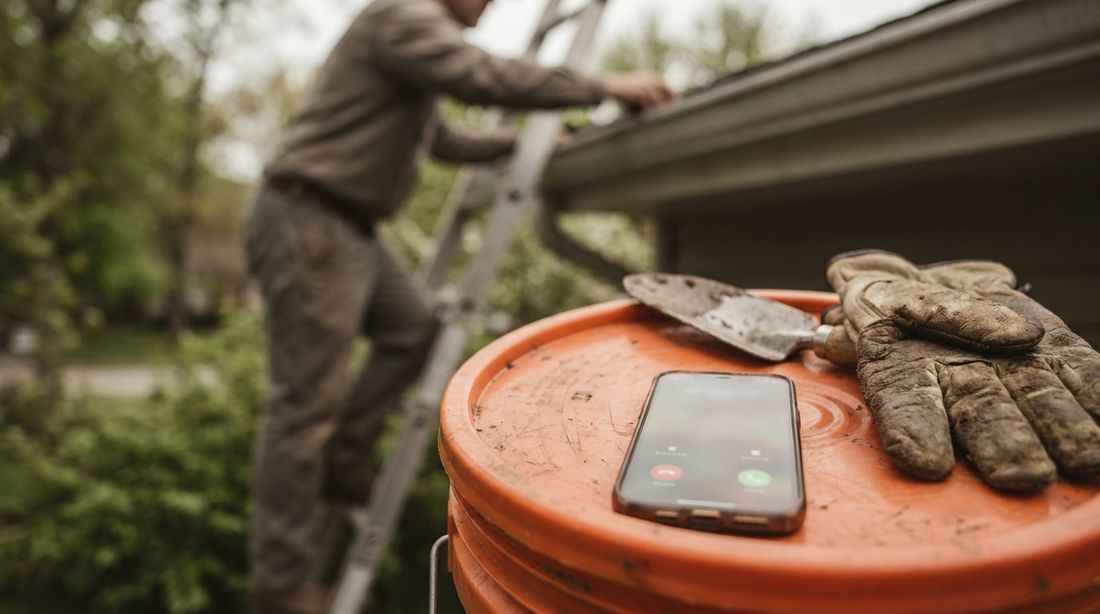
The reason the trades get hit harder than other businesses is plain: a tradesperson can't answer the phone from a crawlspace, an attic, or a roof. The calls arrive exactly when your hands are busy, and most callers who hit voicemail won't leave one. They hang up and dial the next contractor. A missed call in the trades is rarely a message for later. It's a booked job for someone else, already gone.
How to tell if you're winning the rule
Whether the 78% rule helps you or hurts you comes down to two numbers, and most owners can't say either one off the top of their head:
- Your live answer rate. Of every inbound call this week, what share reached a live human on the first try? Not "felt busy." The actual percentage.
- Your response time on the ones you miss. When a call or form does slip through, how long until someone calls or texts back? Minutes, hours, or never?
Those two figures explain most of your booked-job rate. Owners almost always overestimate both, because memory keeps the calls you caught and quietly deletes the ones you missed. The fix isn't guilt. It's measurement, and then a system so the answer doesn't depend on whether you happen to be near your phone.
If you don't know your two numbers, that's the place to start. The Growth Score measures your answer rate, response speed, and booking conversion, then shows you where you're losing the speed game and what it's costing you each month. It takes about three minutes. For the play-by-play on closing the gap, read First to Respond Wins, and browse the rest of the Lead Response Speed pillar for the tactics that move those two numbers.
The 78% rule isn't a trick or a trend. It's been the same for fifteen years across every study that has measured it. The honest question isn't whether it's true. It's whether your shop is fast enough to be the one homeowners reach first.

Jaymo Barnard is a brand strategist and growth architect with 25+ years building scalable marketing systems across wellness, media, consumer products, and education. As founder and CEO of Mandala Growth Partners, he has led initiatives behind major acquisitions, national brand launches, and multi-million-dollar lead-generation systems. At Kinjo Pro he leads brand strategy and growth architecture.
Frequently Asked Questions
The 78% rule is the finding that about 78% of customers buy from the company that responds to their inquiry first. In home services it means the first contractor to answer usually books the job, ahead of price and reviews. The figure comes from a Lead Connect buyer survey, popularized by Vendasta.
For a homeowner with an urgent problem, fast response reads as availability, and availability reads as competence. The contractor who answers now feels like the one who can solve the problem now. By the time a slower competitor calls back, the homeowner has usually already booked.
Within five minutes. The Lead Response Management Study found that responding inside five minutes makes you about 21 times more likely to qualify a lead than waiting 30 minutes. After the first hour, the odds collapse.
Often it does. Price and reviews matter once a homeowner is comparing options, but the 78% rule applies to who gets reached first. If a competitor answers and books the job before you ever connect, your better price and rating never enter the conversation.