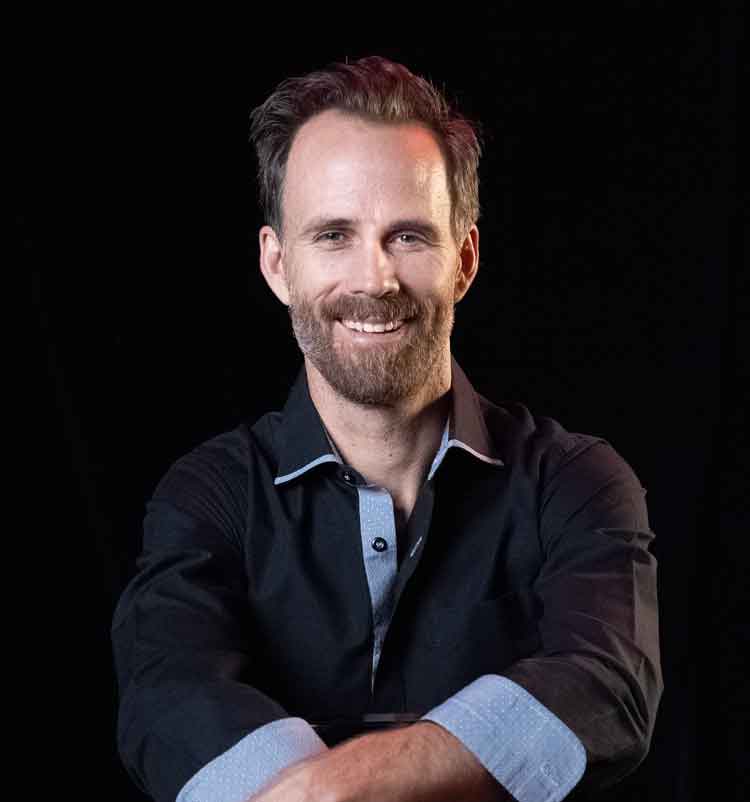
A tradesman at the end of a long day
Why We Built Kinjo

An Honest Day's Work Shouldn't Cost You Your Evenings.

The trades keep everyone else's lives running. This is a letter about why we think they deserve their own back.

A Letter From the Founders

It's 7:40 on a Tuesday. You're finally at the dinner table. The food is hot, your kid is mid-story, and your phone lights up with a number you don't recognize. You already know how this goes. Take it, and you miss the story. Let it ring, and you might be missing a $2,000 job. Either way, somebody loses.

That choice gets made in trades businesses every night in this country, and nobody puts it on the news. A plumber steps away from his daughter's bath to talk a stranger through a leak. An HVAC owner pulls onto the shoulder to answer, because the last call he missed never called back. A roofer watches forty calls stack up after a storm and gets to maybe four.

These are the people who fix what the rest of us can't. The furnace at 2am. The burst pipe on Thanksgiving. The panel that's one bad connection away from a fire. When something in your home fails, a tradesperson is who you call. They show up, they fix it, and they keep the rest of modern life running.

And the thing standing between them and a fair living is, of all things, a ringing phone.

Not skill. Not work ethic. Not demand. The leads are already there and the phone already rings. What breaks is the ten seconds after it rings, when the owner is under a house or on a roof or sitting at his own dinner table. The call goes unanswered. The customer doesn't wait. They scroll to the next name and book whoever picks up.

The cost of a phone nobody can answer.

$4,500
lost every month to unanswered calls
40–60%
of leads gone before the callback
80%
of callers never leave a voicemail
78%
of jobs go to whoever answers first
What Changed

The phone used to wait for you. Now it doesn't.

A customer once called three companies, left messages, and hired whoever called back with the best price. Patience was built into the system. A missed call meant a callback, not a lost job.

That's gone. People search on their phone, tap the first result, and if no one answers in a few rings they tap the next one. The job is decided before you've climbed down off the ladder. Speed quietly became the whole game, and the one person who can't stop to play it is the owner doing the actual work.

So the owner gets squeezed from both sides. A receptionist runs $3,000 to $4,000 a month, more than most one- and two-truck shops can carry. An answering service hands callers to someone who can't quote the job or book it. That leaves the owner as the front desk, the technician, and the dispatcher all at once. Something gives. Usually it's the evening.

The problem was never that the trades fell behind. The phone just got faster than any human on a jobsite can be.

Why Kinjo

We built this so the work could pay without taking everything else.

Between us we've spent decades building the systems that capture demand and the marketing that creates it. One of us builds the machine. The other makes sure the right people walk up to it. We kept seeing the same gap: strong operators losing real money to a problem that has nothing to do with how good they are at the job.

Kinjo is an AI front desk built for the trades. It answers every call in your company's name, qualifies the work, books it into your calendar, follows up on the leads that go quiet, and asks for the review once the job is done. It runs nights, weekends, and holidays, and it costs a fraction of a receptionist. We set the whole thing up, and most owners are live within a few days.

We made it for the owner on the truck. Not for a marketing department, not for someone with time to learn another piece of software. For the person doing $200K to $5M a year who can't justify a full-time hire and is tired of choosing between the phone and the people at the table.

The trades take care of everyone else. Kinjo is our attempt to take care of the trades.

With respect,Jeffrey Rose & Jaymo Barnard, Co-founders, Kinjo
The People Behind It

Meet the Leadership Team

Jeffrey Rose

Jeffrey Rose, CTO & Co-Founder of Kinjo
CTO & Co-Founder

Jeffrey R. Rose is a systems operator and growth strategist with 20+ years of experience building and scaling businesses across technology, consumer products, and food service.

With a background in software engineering and entrepreneurship, he has founded, grown, and exited multiple companies, including a global health and supplement brand.

As co-founder of Kinjo, Jeffrey leads systems architecture and AI implementation, helping service-based businesses improve lead capture, follow-up, and operational efficiency through scalable automation systems.

Jaymo Barnard

Jaymo Barnard, CMO & Co-Founder of Kinjo
CMO & Co-Founder

Jaymo Barnard is a brand strategist and growth architect with 25+ years of experience building scalable marketing systems and growth strategies across wellness, media, consumer products, and education.

As founder and CEO of Mandala Growth Partners, he has led initiatives that contributed to major acquisitions, national brand launches, large-scale membership growth, and multi-million-dollar lead generation systems.

As co-founder of Kinjo, Jaymo leads brand strategy and growth architecture, helping service-based businesses improve customer acquisition, messaging, and revenue growth through scalable marketing and automation systems.

The Invitation

If any of this sounds like your week, hear it for yourself.

Call the line and talk to it like a customer. Ninety seconds tells you everything. Then decide.