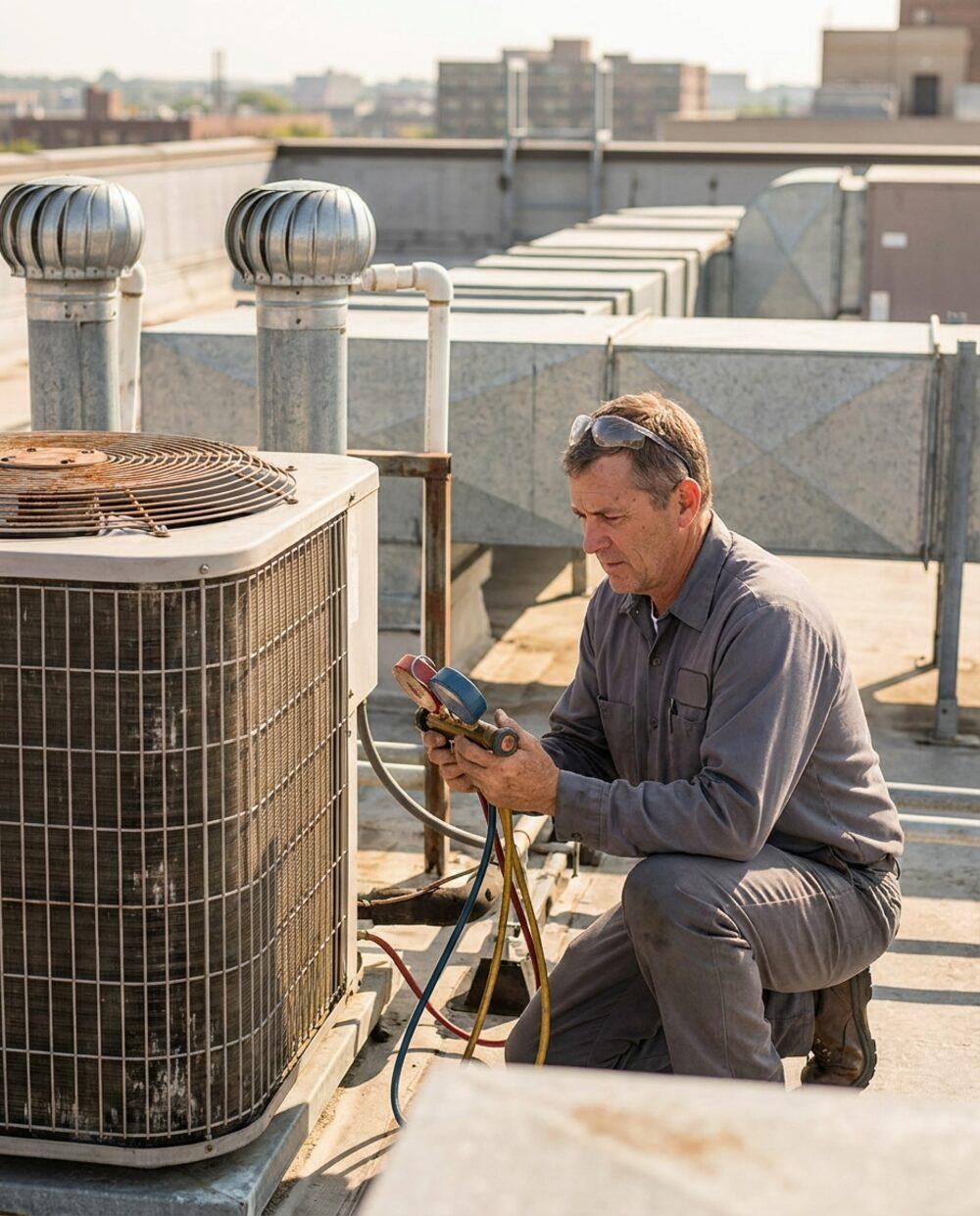
HVAC has a brutal pattern built into it. Demand is not steady. It spikes. The first 95-degree day of summer and the first hard freeze of winter generate a flood of calls in a few hours. And that flood arrives at the exact moment your techs are already maxed out and no one is free to answer the phone.
This is why so many HVAC companies lose their best weeks of the year. The leads are there. The capacity to capture them is not.
The HVAC-specific problem with the phone
A homeowner with no heat or no AC is the most motivated buyer you will ever have, and the least patient. They will not wait for a callback. They will work down the Google results until someone answers and says "we can be there today."
During a heat wave, your office line might take more calls in a morning than it normally does in a week. A single receptionist can answer one call at a time. Calls two, three, and four hit voicemail, and those are jobs.
Why hiring for the spike doesn't work
You cannot staff for your busiest morning without overpaying for every slow afternoon. Hire enough front-desk help to cover a heat wave and you are bleeding payroll the other 40 weeks of the year. Hire for a normal week and you drown every time demand spikes. There is no headcount that fits a demand curve this uneven.

The strategy: capacity that scales with demand
The fix is a call-capture system that handles unlimited simultaneous calls. It does not matter if one homeowner calls or forty call in the same ten minutes. Each one is answered on the first ring, qualified, and booked. The system's capacity flexes with demand; your payroll does not.
For HVAC specifically, the system should be set up to do three things:
Triage urgency. "No cooling with a newborn in the house" is not the same as "I'd like a quote next month." Capture the detail that tells you what to prioritize.
Capture the equipment basics. System type, age, and the symptom, so the tech rolls up informed instead of blind.
Book against real availability. Same-day and next-day slots are your highest-value inventory during a spike. The system should fill them automatically.
A note on after-hours emergencies
A furnace that dies at 11pm in January is a premium job that goes to whoever picks up. An always-on system means those calls become booked tickets on tomorrow's schedule instead of voicemails you find at 7am, long after the homeowner called someone else.
If you want to know how many calls your shop is missing during peak hours specifically, the Growth Score will quantify your answer rate and show where the leaks are concentrated.

Jeffrey R. Rose is a systems operator and growth strategist with 20+ years building and scaling businesses across technology, consumer products, and food service. A software engineer and entrepreneur, he has founded, grown, and exited multiple companies, including a global health and supplement brand. At Kinjo Pro he leads systems architecture and AI implementation.
Frequently Asked Questions
HVAC demand spikes during heat waves and cold snaps. The phone rings hardest exactly when techs are slammed. A single person can only answer one call at a time, so during a rush the overflow goes to voicemail and those jobs go to competitors.
It rarely pencils out. Staffing for your busiest morning means overpaying every slow week. An automated system that handles unlimited simultaneous calls scales with demand without adding year-round payroll.
A single service call is commonly worth $500 or more, and that's before the system replacement, maintenance plan, or repeat business it can lead to. Even a few missed calls during a spike adds up quickly.